 Written by Jane Aubrey
Biotech’s most revealing deal this week did not center on a drug asset, a phase 3 readout, or a late-stage licensing scramble. It centered on a tool company. In the transaction announced by Bio-Techne, Merck KGaA agreed to acquire the company for $73 per share in cash, valuing the business at roughly $11.3 billion. On paper, that is a large strategic acquisition in a familiar category. In practice, it says something more important about where power is accumulating in life sciences.
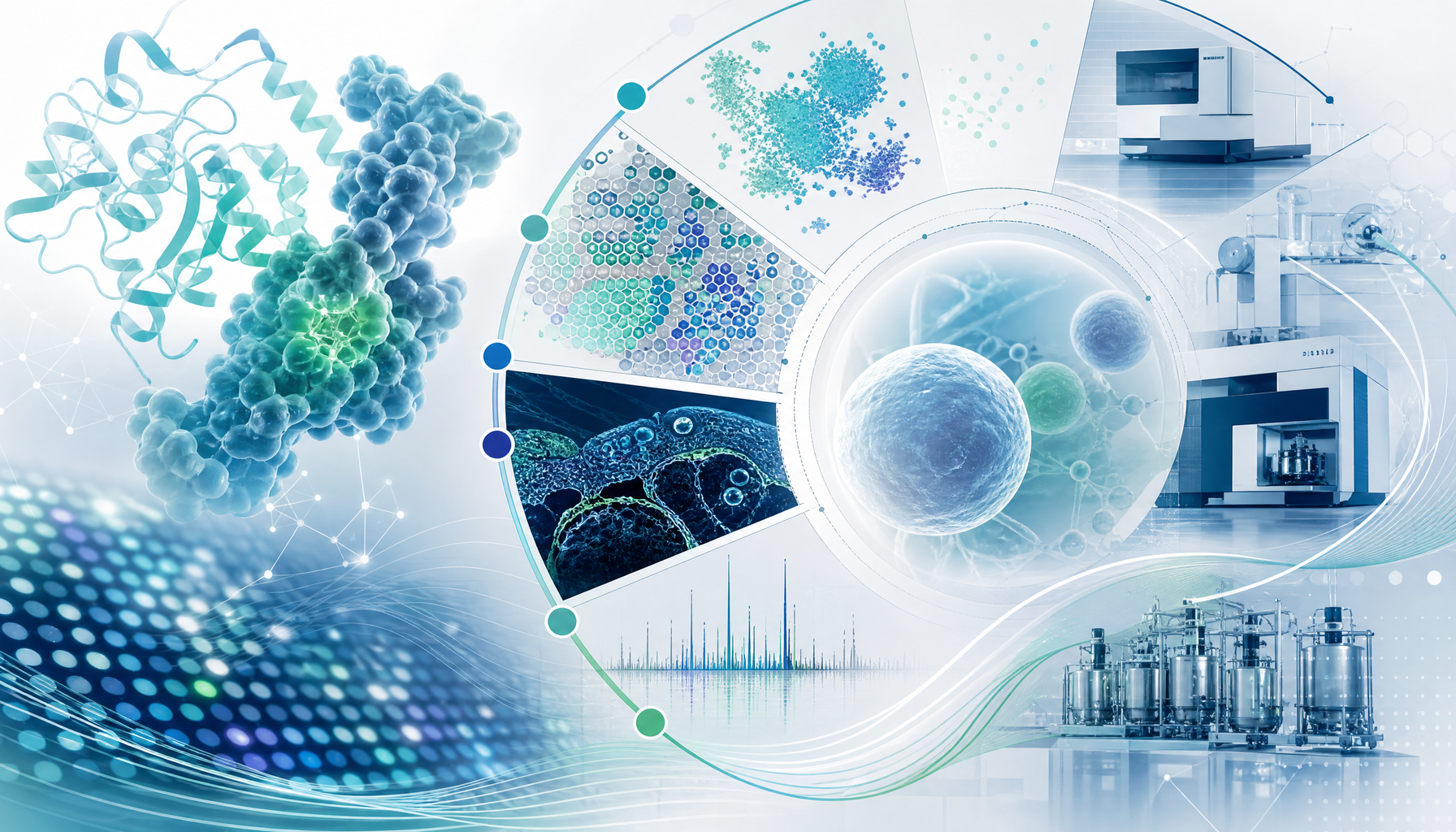
The old way to read this kind of transaction would be as a scale deal in research tools. That description is now too small. Merck KGaA is not merely buying reagents, instruments, and catalog breadth. It is buying position inside a workflow stack that increasingly shapes how next-generation biology gets discovered, characterized, and ultimately manufactured. The company’s own description of the rationale makes that clear. The combination is meant to strengthen Merck KGaA’s reach across discovery, translational research, development, testing, and commercial manufacturing, while deepening its presence in multi-omics, spatial biology, precision diagnostics, and cell and gene therapy.
That list matters because those categories are no longer just support functions for therapeutic innovation. They are becoming strategic control points. A company that owns the analytical technologies, assay infrastructure, spatial-biology tools, and cell-therapy process components used across the scientific journey does not simply participate in innovation. It helps define the pace, cost, reproducibility, and technical direction of innovation itself.
Bio-Techne’s portfolio explains why the deal is worth reading this way. The company brings ProteinSimple, which strengthens automated protein detection and analysis; RNAscope and related in situ hybridization capabilities, which reinforce spatial-biology and diagnostic depth; and a broader position in cell-therapy materials, analytics, and process technologies. Those are not glamorous assets in the way an oncology franchise or obesity platform might be glamorous. But they sit close to the experimental bottlenecks where modern biotech either scales or stalls.
Merck KGaA is also unusually candid about the industrial logic. The companies frame the merger around integrated workflows and platformed capabilities, not only around sales synergies. Yes, the announced numbers include an expected EUR 140 million of annual cost synergies by year three and a 36% premium to Bio-Techne’s one-month volume-weighted average price. But the more interesting message is that Merck KGaA wants to be present across the full life-science value chain with tighter ownership of the tools that researchers and manufacturers increasingly use to generate dependable biological insight.
This reflects a broader shift in biotech economics. For years, the most obvious scarcity sat in molecules, patents, and development-stage assets. Those remain valuable, but the complexity of next-generation biology is raising the value of what sits underneath the molecule. Multi-omics interpretation, spatial characterization, analytical reproducibility, and cell-therapy manufacturing know-how are becoming harder to treat as interchangeable inputs. When those capabilities are scarce, the companies that supply them start to look less like vendors and more like infrastructure.
That is why this acquisition should not be filed away as a simple tools-sector consolidation. It is better understood as a sign that life-science platforms are being rebuilt around workflow ownership. The winners may not just be the groups with the best drugs. They may be the groups that can lock themselves into the points where biology becomes legible, manufacturable, and regulator-ready.
There is an obvious bullish case for the deal. Merck KGaA gets deeper scientific reach in exactly the areas where biologic complexity is rising, while Bio-Techne gains broader global distribution, infrastructure, and channel access. If those assets are genuinely complementary, the combined platform could become more important to customers as research programs span discovery, biomarker work, translational testing, and advanced therapeutic manufacturing.
The risk is that investors over-romanticize integration and underestimate execution difficulty. Workflow consolidation sounds elegant in strategy language, but life-science customers are exacting, and technical trust is hard to preserve across large organizations. Still, even that risk reinforces the core point. You only pay this kind of price for a tools company when you believe the tools are no longer peripheral.
This week’s Merck KGaA–Bio-Techne deal suggests exactly that. In modern biotech, the companies that organize scientific workflow are beginning to command the strategic status once reserved mainly for therapeutic platforms themselves.