 Written by Marcus Chen
Ozempic and Wegovy have become household names for weight loss, but a wave of new research reveals they are reshaping health in ways that go far deeper than the number on the scale — and raising important questions about muscle.
When semaglutide first arrived as a diabetes drug, nobody anticipated it would become one of the most consequential medicines of the twenty-first century. Today, tens of millions of people worldwide are taking GLP-1 receptor agonists — a class that includes Ozempic, Wegovy, and Mounjaro — primarily to lose weight. But as usage has scaled into a global real-time experiment, researchers are discovering that these drugs are doing far more to the human body than simply suppressing appetite.
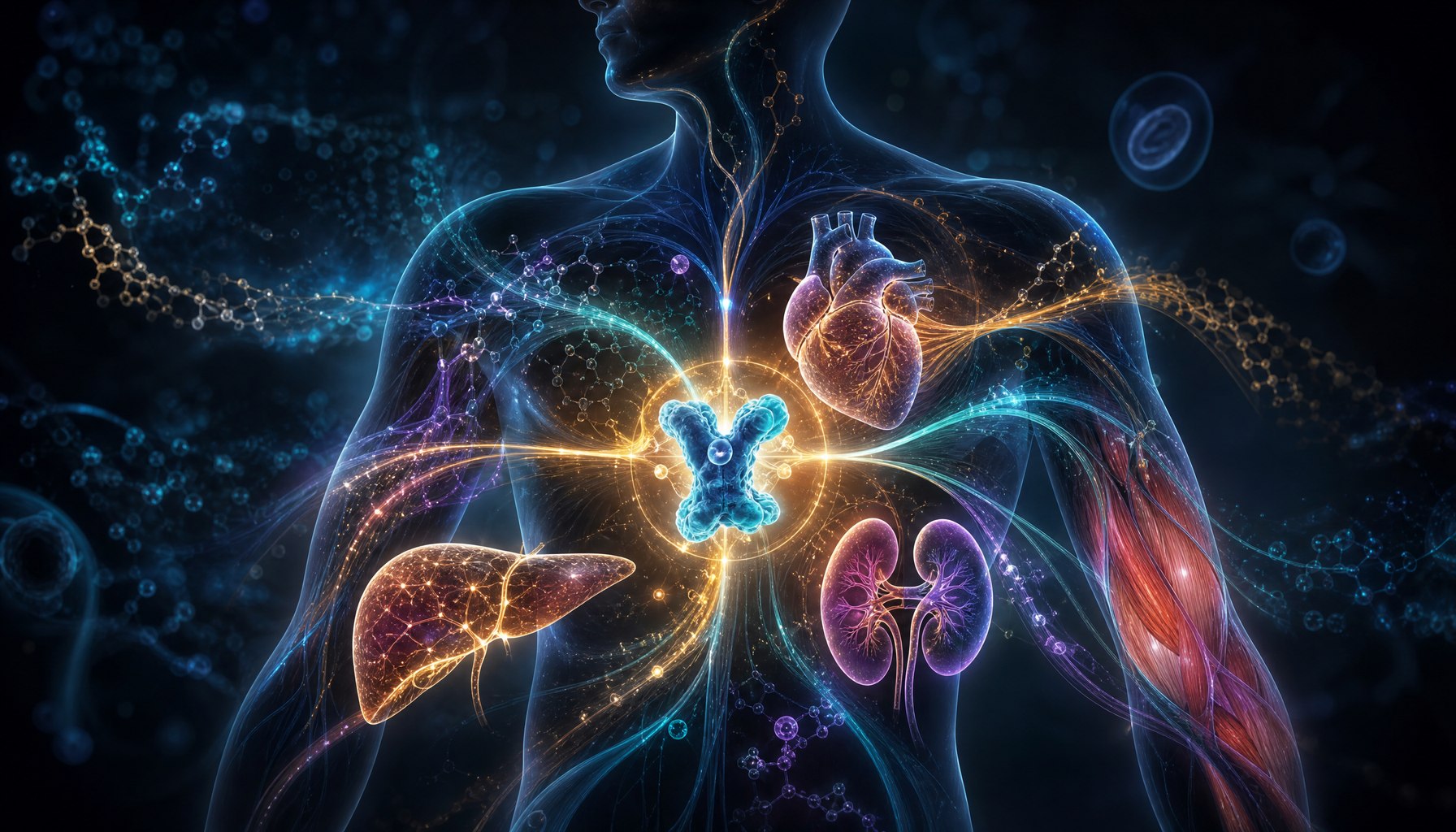
The benefits, it turns out, extend well beyond weight loss itself. The FDA has now approved semaglutide not only for obesity and type 2 diabetes, but also to reduce the risk of heart attacks and strokes, to treat obstructive sleep apnea, severe liver disease (MASH), and chronic kidney disease. Researchers increasingly believe many of these effects are independent of weight loss — that the drug is acting directly on organs and inflammatory pathways in ways that scientists are still working to fully understand. At the 2026 American Diabetes Association Scientific Sessions in New Orleans, experts described the current moment as one of iterating in real time, with clinical evidence arriving faster than the medical community can fully process it.
At the 2026 ASCO Annual Meeting, new data linked GLP-1 use to a reduced risk of several obesity-related cancers, including endometrial, colorectal, and pancreatic cancer. The proposed mechanism goes beyond weight reduction alone, pointing to the drugs’ anti-inflammatory effects and their potential to reduce insulin resistance — a known driver of cancer cell proliferation.
But alongside the expanding list of benefits, a significant concern has emerged: muscle loss. When people lose weight rapidly — whether through GLP-1 drugs or caloric restriction — they lose not just fat but lean muscle mass as well. Muscle doesn’t return quickly, and its loss has real consequences for strength, mobility, and long-term metabolic health.
A study published in June 2026 in the Proceedings of the National Academy of Sciences by Stanford Medicine researchers found that semaglutide reduced the regenerative capacity of muscle stem cells in mice — meaning that even when muscle appeared intact under normal conditions, it recovered more poorly after injury or exercise-induced stress. The lead researcher, Professor Helen Blau, described this as a major unmet need: people on GLP-1 drugs are losing not just muscle mass, but the biological machinery that rebuilds it.
The same Stanford team identified a potential solution. An existing drug compound, MF-300, which inhibits an enzyme called 15-PGDH and is already in Phase 1 clinical trials for age-related muscle loss, was able to restore muscle regenerative capacity in mice taking semaglutide — without undermining fat loss. Blau’s team believes MF-300 could eventually become a standard companion to GLP-1 therapy, preserving muscle health throughout the weight loss process.
For the millions of people currently on these medications, the practical takeaway is clear: resistance training and adequate protein intake remain essential, not optional, during GLP-1-assisted weight loss. The drugs are powerful tools, but they work best when supported by the kind of lifestyle habits that protect lean mass.
The broader picture emerging from 2026’s research is one of extraordinary complexity. GLP-1 drugs are not simply weight loss medications. They appear to be systemic metabolic modulators with effects on the heart, liver, kidneys, brain, and immune system. Understanding how to maximize their benefits while protecting against their risks — particularly muscle loss — is now one of the most active frontiers in medicine. For patients, staying informed about this rapidly evolving science is not just interesting. It is increasingly essential.